

Supply Chain Security: Your Weakest Link?
Supply Chain Security: Your Weakest Link?
Supply chain security. It has been in the news a bit of late. It hurts. It sucks to be on the receiving end. So let us start with a couple of terms.
Blast radius. Normally this is used to describe internal impact. A system is breached. What is the blast radius. Who else gets hurt. What else goes down. Now look at that through the lens of supply chain risk. If one of your vendors has access to your back end, your finance systems, your data, your credentials, congratulations, you are now standing inside their blast radius and you are going to get hit with shrapnel.
Most supply chain attacks do not target the primary organisation. Sometimes the main organisation is the objective and everyone else gets caught in the crossfire. Other times the attackers deliberately go after the smallest, weakest, least invested link because they know it will crumble first. That is usually an SMB with a single IT person who somehow became the cyber lead because the boss told them to. Cybersecurity is not an IT risk or an IT problem. It is a business risk. IT and cyber are cousins, not twins. They work on the same systems, but they are not the same discipline (it is in the same light that you do not see your doctor for a toothache. Yes, they can make the pain go away, but the root cause of the problem is still present).
Third party assurance is not paperwork. It is how you actually verify that a vendor is doing what they say they are doing. Frameworks like ISO 27001, SOC 2, NIST CSF, and SMB1001 exist for a reason. They provide a standard way to assess whether a business has at least met a minimum benchmark. And yes, minimum is the operative word. Under ISO 27001, you can technically have no firewalls, no passwords, and no multi factor authentication and still pass if the organisation has assessed and accepted the risk. ISO tells you the management system exists and is operating. It does not magically confirm the environment is secure. You still need questionnaires. You still need evidence. And with SOC 2, you really do need to read the report properly and have an actual conversation.
This is not a one and done exercise. You need to cycle back. Quarterly, six monthly, annually, depending on risk, but never longer than two years. Businesses change. Controls drift. People cut corners. You also need contract clauses that force notification within 24 or 48 hours if the vendor is breached so you can take protective action. If they fall over and expose your access or your data, that is friendly fire. You are the bystander hit by the shrapnel.
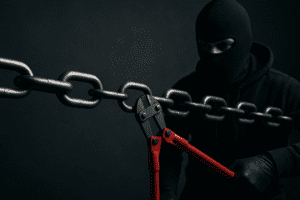
A chain is only as strong as its weakest link. Your supply chain is no different. Small businesses are softer targets that lead directly to high value assets. This does not mean attackers will not target the big players directly. It means they will choose the easiest path when it suits them.
You can outsource your service. You cannot outsource your risk. You are still responsible for managing the security of your business. If your partners crumble, you are still the one who pays for the cleanup.
If you would like to have a conversation about how to effectively assess the supply chain risk that is present in your business (because we do know it is there), reach out for a call. Always happy to have a chat. Always happy to have a conversation.


Leave a Reply
Want to join the discussion?Feel free to contribute!